


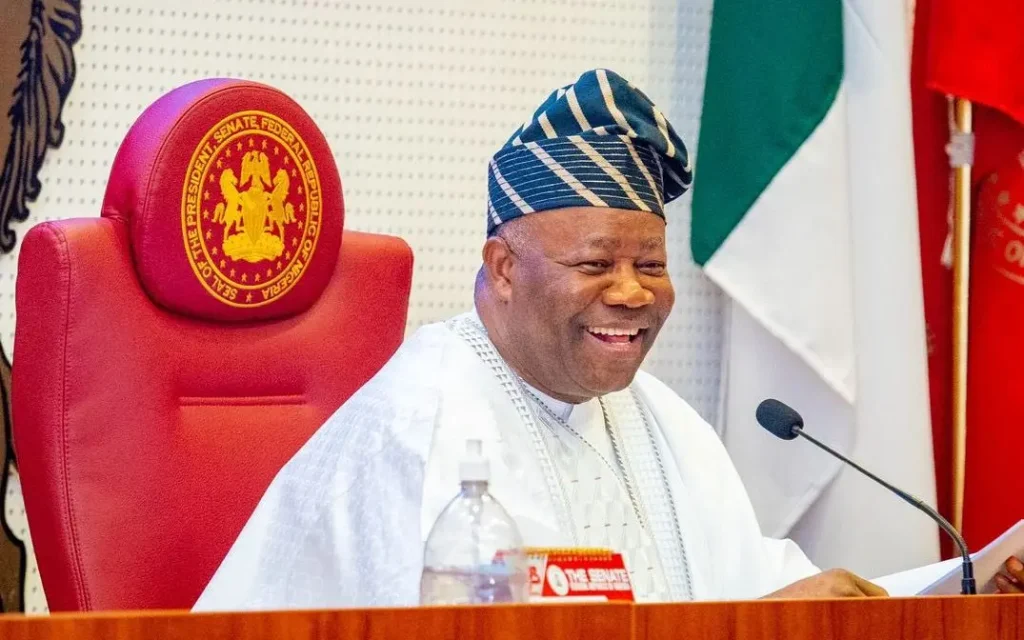
The Senate on Tuesday rejected calls to nationalise South African-owned businesses operating in Nigeria, including MTN and DStv, despite growing outrage over renewed xenophobic attacks on Nigerians in South Africa. While strongly condemning the violence, lawmakers instead urged the Federal Government to intensify diplomatic efforts, secure concrete assurances for the safety of Nigerians abroad, and ensure that those responsible for the attacks are brought to justice.
The debate, which marks the second time in two months that the issue has come before the Senate, followed a motion titled “Motion on the Need to Halt the Recurring Xenophobic Attacks and Intimidation Against Nigerians and Other African Nationals in the Republic of South Africa,” sponsored by Senator Asuquo Ekpenyong (APC, Cross River South).
Presenting the motion, Ekpenyong expressed grave concern over a fresh wave of xenophobic violence targeting Nigerians and other African nationals after the expiration of a June 30, 2026 ultimatum issued by vigilante groups demanding that foreign nationals leave South Africa. He noted that the attacks had resulted in widespread fear, displacement, and destruction of businesses and homes, affecting even individuals with valid residence and work permits.
The Senate urged the Federal Government, through the Ministry of Foreign Affairs and the Nigerian High Commission in South Africa, to obtain formal assurances from the South African authorities on the protection of Nigerians. It also called for the arrest and prosecution of all individuals involved in acts of violence, intimidation, looting, and unlawful enforcement of immigration measures.
In addition, lawmakers directed relevant agencies, including the Nigerians in Diaspora Commission, to strengthen emergency consular services and compile a verified register of Nigerians affected by the attacks. The register, they said, should capture cases of death, injury, displacement, unlawful detention, and loss of property, with a view to facilitating legal redress, restitution, and compensation.
The Senate further urged the Federal Government to engage other affected African countries and work through the African Union to establish an early warning and accountability mechanism to address xenophobic violence across the continent.
As part of its resolutions, the Senate mandated its Committees on Foreign Affairs and Diaspora and Non-Governmental Organisations to review the implementation of its earlier resolutions of May 5, 2026, and report back within two weeks on progress made, assurances obtained, and outstanding actions.
During the debate, some lawmakers proposed stronger retaliatory measures. Senator Adams Oshiomhole (APC, Edo North) suggested that if South Africa fails to compensate Nigerian victims, Nigeria should consider appropriating profits made by South African companies operating within its borders to provide compensation.
He argued that it would be unjust for Nigerian taxpayers to bear the burden of compensating victims while foreign businesses continue to operate profitably in the country. He also criticised what he described as the inability of South African authorities to protect affected Nigerians.
Similarly, Senator Wasiu Eshilokun (APC, Lagos Central) raised the possibility of nationalising South African businesses, while Senator Abdul Ningi (PDP, Bauchi Central) supported calls for firm action against continued attacks.
However, the Deputy President of the Senate, Barau Jibrin (APC, Kano North), who presided over the session, cautioned against hasty decisions. He noted that while the attacks were unacceptable, the Senate must rely on verified information and allow ongoing investigations to be concluded before taking far-reaching measures.
Jibrin clarified reports attributed to a South African official regarding compensation, explaining that the remarks referred specifically to individuals occupying properties without legal title, and not a blanket denial of compensation to all victims. He nevertheless stressed that this did not excuse the failure of authorities to prevent the violence.
He urged patience, directing the Senate Committee on Foreign Affairs to submit its report within two weeks to enable the chamber to take informed and decisive action.
Reaffirming its stance at the close of deliberations, the Senate emphasised that Nigeria’s response must balance firmness with responsibility, prioritising justice for victims while avoiding actions that could escalate tensions. Lawmakers maintained that sustained diplomatic engagement, regional cooperation, and accountability remain the most effective path to protecting Nigerians and addressing the broader challenge of xenophobia in Africa.