


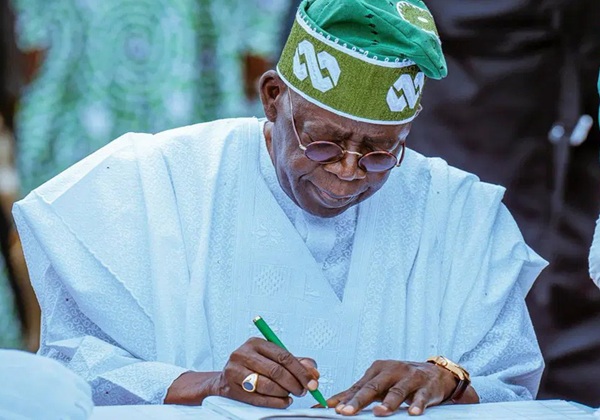
President Bola Tinubu has ordered a sweeping investigation into major global technology companies and Generative Artificial Intelligence (AI) platforms over allegations of anti-competitive practices and the unauthorised use of content belonging to Nigerian media organisations. The directive signals a decisive escalation in the Federal Government’s response to mounting concerns about Big Tech’s dominance and its impact on the country’s news industry.
The move comes four months after Tinubu pledged to support an evidence-driven campaign by Nigerian media stakeholders against what they describe as unfair practices by global digital platforms, alongside the broader economic pressures confronting the industry. The directive followed a joint petition submitted to the Presidency by the Nigerian Press Organisation (NPO), an umbrella body comprising the Newspaper Proprietors’ Association of Nigeria, the Nigeria Union of Journalists, the Broadcasting Organisations of Nigeria, and the Guild of Corporate Online Publishers.
The instruction was conveyed to the Federal Competition and Consumer Protection Commission (FCCPC) through the Minister of Information and National Orientation, Mohammed Idris. It potentially marks a turning point in relations between global digital platforms and Nigeria’s media sector, which has long raised concerns over shrinking revenues and the widespread use of its content without compensation.
In a statement issued on Monday, FCCPC’s Director of Corporate Affairs, Ondaje Ijagwu, confirmed that the investigation would target leading technology firms, including Meta, Alphabet (Google’s parent company), and X (formerly Twitter), as well as certain Generative AI platforms operating in Nigeria.
“Big technology companies have come under the radar of the Federal Competition and Consumer Protection Commission following allegations of anti-competitive practices, unlawful exploitation of news content, and other potentially unfair market conduct,” the statement said. “Also to be investigated are Generative Artificial Intelligence platforms operating in Nigeria. This follows a directive from President Bola Tinubu to examine a joint petition submitted by the Nigerian Press Organisation.”
According to the NPO, the activities of these firms may be undermining fair competition, threatening the commercial viability of local media organisations, and infringing on the rights of content creators and publishers. The group has expressed growing concern over what it describes as practices capable of distorting the media market and weakening the sustainability of Nigeria’s news ecosystem.
The Executive Vice Chairman and Chief Executive Officer of the FCCPC, Tunji Bello, said the commission would conduct an independent, transparent, and evidence-based inquiry.
“We recognise the strategic importance of the media to Nigeria’s democracy and the equally critical role of technology in driving innovation and economic growth,” Bello said. “Our responsibility is to objectively determine the facts and ensure that competition within the digital ecosystem remains fair, transparent, and consistent with Nigerian law.”
He emphasised that the investigation does not presume wrongdoing by any party. “This inquiry is not directed at any entity by presumption of guilt. It is an opportunity to examine the facts, hear from all stakeholders, and determine whether any conduct has resulted in anti-competitive outcomes or unfair business practices. Every party will be given a fair opportunity to present relevant information before conclusions are reached.”
The FCCPC said the probe would assess whether the alleged practices breach the Federal Competition and Consumer Protection Act 2018 or any other applicable laws. Key areas of focus include claims of market dominance and anti-competitive conduct by global technology companies.
Another critical component of the investigation will examine allegations of the unauthorised extraction, scraping, ingestion, and commercial use of copyrighted journalistic content—including news articles and broadcast materials—for the training and development of Generative AI models.
The commission will also review complaints from Nigerian publishers who say they have been denied fair opportunities to negotiate compensation or enter into equitable commercial agreements for the use of their content.
The development comes amid growing global scrutiny of the relationship between media organisations and technology platforms that distribute and monetise news. Several countries have introduced regulations requiring digital platforms to compensate publishers.
In South Africa, sustained advocacy by media organisations and a formal investigation by the Competition Commission led to an agreement under which Google will pay local news outlets R688 million (about $40 million) annually over a period of three to five years.
Observers say the outcome of Nigeria’s investigation could have far-reaching implications for journalism, digital regulation, and the balance of power between media and technology firms in the country.
The probe also follows a landmark case in which the FCCPC imposed a $220 million penalty on Meta for alleged violations of Nigeria’s competition and consumer protection laws, including data privacy breaches. The company has appealed the decision.
The latest move underscores the Federal Government’s determination to ensure that global technology companies operating in Nigeria comply with local laws and that Nigerian publishers receive fair value for the content that underpins the digital information ecosystem.
Efforts to obtain comments from Google and Meta were ongoing at the time of filing this report. Representatives of both companies acknowledged inquiries and indicated they would respond, but no substantive comments had been received.
Tinubu had earlier given assurances during an interfaith dinner in March attended by a high-level delegation from the Nigerian Press Organisation, led by its President and Publisher of The Guardian, Lady Maiden Alex-Ibru. Other prominent attendees included Aremo Olusegun Osoba; Vanguard publisher, Sam Amuka; THISDAY/ARISE News Chairman, Nduka Obaigbena; Channels Television Chairman, John Momoh; Nigerian Television Authority Director-General, Saliu Abdulhamid Dembos; and Nigerian Guild of Editors President, Eze Anaba.
At the event, the Deputy President of the Newspaper Proprietors’ Association of Nigeria and Publisher of BusinessDay, Frank Aigbogun, warned that some technology companies were increasingly scraping proprietary content—often bypassing digital paywalls—to train AI systems.
He urged the president to direct the FCCPC to investigate claims that Big Tech’s dominance and anti-competitive practices are costing Nigerian media organisations up to 70 per cent of their legitimate revenue—losses estimated by some sources to run into hundreds of millions of dollars—while also contributing to job losses and reduced industry opportunities.