


In dollar terms, however, the country’s debt stock increased from approximately $113.42 billion in June 2023 to $120.93 billion in June 2026, reflecting a considerably smaller increase.
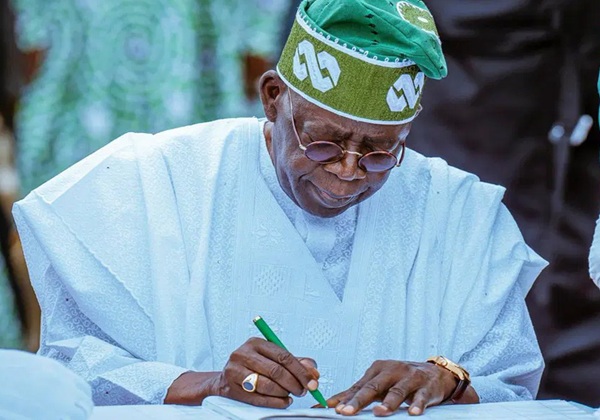
Amid growing concerns over Nigeria’s rising public debt, President Bola Ahmed Tinubu has asked the Senate to approve a fresh external borrowing of N10.79 trillion, equivalent to approximately $7.7 billion, to finance part of the Federal Government’s 2026 budget deficit.
The request, contained in a letter read on the floor of the Senate on Wednesday by Senate President Godswill Akpabio, comes as the country’s total public debt stock continues to climb, reaching N166.79 trillion as of June 30, 2026, according to figures released by the Debt Management Office (DMO).
Tinubu explained that the 2026 Appropriation Act provided for N29.2 trillion in new borrowings to help finance a budget deficit of approximately N31.4 trillion. The proposed borrowing comprises N18.4 trillion from domestic sources and N10.79 trillion from external creditors.
He said the government intended to raise the external component through one or a combination of financing options, including concessional and commercial loans from multilateral and bilateral institutions, facilities from the International Monetary Fund (IMF), bridge financing arrangements, direct borrowing from international financial institutions and Eurobond issuance.
The President said the government would evaluate the available options based on their respective costs, benefits and access timelines, with greater emphasis on Eurobond issuance because of its relatively faster execution and capacity to raise substantial funds at competitive costs.
Nigeria’s debt profile under Tinubu
The latest borrowing request comes against the backdrop of a significant expansion in Nigeria’s public debt stock since the Tinubu administration came into office in May 2023.
According to the DMO, Nigeria’s total public debt stood at N87.38 trillion as of June 30, 2023. By June 30, 2026, the figure had risen to N166.79 trillion, representing an increase of approximately N79.41 trillion, or 91 per cent, in three years.
In dollar terms, however, the country’s debt stock increased from approximately $113.42 billion in June 2023 to $120.93 billion in June 2026, reflecting a considerably smaller increase. The difference highlights the impact of exchange-rate movements on the naira value of Nigeria’s external obligations.
It is also important to note that the June 2023 debt figure included N22.71 trillion in Federal Government Ways and Means Advances from the Central Bank of Nigeria, which was incorporated into the official debt stock following its securitisation. Consequently, the increase in the reported debt figure should not be interpreted entirely as fresh borrowing undertaken by the Tinubu administration.
Nevertheless, the country’s debt profile has continued to expand through a combination of domestic and external borrowing.
The DMO’s June 2026 figures showed that domestic debt accounted for N91.59 trillion, representing approximately 54.9 per cent of the total, while external debt stood at N75.20 trillion, or 45.1 per cent.
The Federal Government accounted for the bulk of the country’s outstanding obligations, with the states and the Federal Capital Territory accounting for the balance.
The rising debt stock has continued to draw attention to the country’s borrowing requirements, debt-servicing obligations and capacity to generate sufficient revenue to meet its financial commitments.
External borrowing to fund priority projects
Explaining the purpose of the latest loan request, Tinubu said the funds would be deployed to finance priority projects and programmes across defence and security, transportation, agriculture, power, education and healthcare.
He added that the final borrowing terms, including interest rates and repayment periods, would depend on prevailing market conditions at the time the funds were secured.
The Federal Ministry of Finance and the Debt Management Office, he said, would work together to obtain the most favourable financing terms for the country.
The President also requested approval for the borrowing to be raised at the 2026 budget exchange rate of N1,409 to the dollar, with the proceeds to be received by the Central Bank of Nigeria on behalf of the Federal Government.
He said the funds would also provide support for the country’s external reserves.
Senate refers request to debt committee
Reacting to the President’s request, Akpabio said the latest correspondence superseded an earlier proposal seeking approval for external borrowing of approximately $20.3 billion.
He described the new letter as more explicit about the government’s borrowing requirements and financing arrangements.
According to the Senate President, the government would explore different funding sources to secure favourable borrowing terms through a willing-seller, willing-buyer arrangement.
Akpabio subsequently referred the request to the Senate Committee on Local and Foreign Debt for further consideration and directed the committee to report back as soon as practicable.