


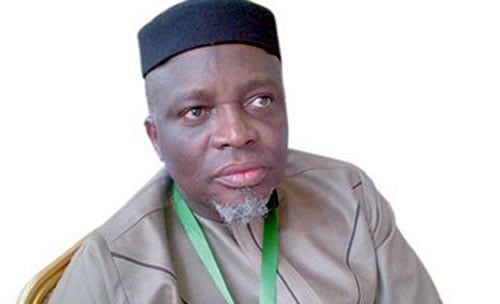
The Minister of State for Education, Suwaiba Said Ahmad, on Monday signalled the imminent end of an era at the Joint Admissions and Matriculation Board (JAMB), announcing that the 2026 Policy Meeting on Admissions into Tertiary Institutions would be the last to be overseen by its Registrar, Is-haq Olanrewaju Oloyede.
Speaking in Abuja, Ahmad described Oloyede’s 10-year tenure as one that “fundamentally changed the institution,” hinting at his impending exit from the board’s leadership.
“This is the last policy meeting you will be holding. He has been here for ten years. He has done many good things. Ten years is a long time, but he is not tired,” she said, in remarks that drew a mix of applause and reflection from stakeholders. “We will just give you a resting period to relax a bit, and then we will just call you back.”
Oloyede, who assumed office on August 9, 2016, inherited an agency long dogged by inefficiency, financial opacity, and credibility concerns. Within a remarkably short period, he embarked on sweeping administrative and technological reforms that redefined JAMB’s operational culture.
By 2017—barely a year into his tenure—the board recorded a dramatic financial turnaround, remitting ₦7.8 billion to the Federal Government. This marked a sharp departure from its historical performance, having remitted less than ₦50 million cumulatively between 1978 and 2016.
Over the course of a decade, JAMB under his leadership generated and remitted over ₦20.7 billion in operating surplus, while also funding infrastructure upgrades, staff development, and examination reforms from internally generated revenue. The improved fiscal discipline and efficiency contributed to a landmark policy decision by the Federal Government to reduce tertiary institution application fees by 30 per cent.
Beyond finances, Oloyede’s tenure is widely associated with the stabilisation of Nigeria’s centralised admissions system, the expansion of computer-based testing, and the tightening of examination integrity through biometric verification and enhanced monitoring mechanisms.
Before his appointment to JAMB, Oloyede had built a formidable reputation in academia and administration. He served as Vice-Chancellor of the University of Ilorin from 2007 to 2012, a period during which the institution gained recognition for maintaining one of the most stable academic calendars in the country.
He also held key leadership roles within the academic community, including chairing both the Association of Vice-Chancellors of Nigerian Universities and the Committee of Vice-Chancellors between 2011 and 2012, positioning him as a central figure in higher education policy coordination.
Earlier in his career, Oloyede served as Secretary-General of the Nigerian Supreme Council for Islamic Affairs, where he was deeply involved in interfaith engagement, Islamic scholarship, and national religious administration. His tenure at the NSCIA further cemented his reputation as a disciplined administrator capable of navigating complex institutional landscapes—an attribute that later defined his stewardship at JAMB.
A professor of Islamic Studies since 1995, Oloyede has contributed extensively to scholarship, with nearly 100 academic publications and participation in numerous international conferences.
His public service has been recognised with multiple honours, including the Officer of the Federal Republic (OFR) in 2014, Commander of the Order of the Niger (CON) in 2022, the National Productivity Order of Merit Award in 2019, and the Nigeria Excellence Award in Public Service (Education Category) in 2022.
Now 71, Oloyede is widely regarded as one of the most consequential registrars in JAMB’s history, having redefined both its financial architecture and public perception. As he prepares to step aside, stakeholders say his legacy will likely shape the board’s operations for years to come.