


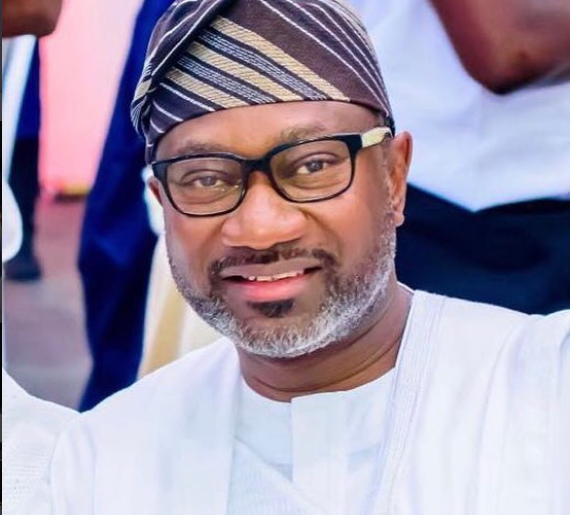
Lagos – Chairman of First HoldCo Plc, Mr. Femi Otedola, has framed his over N600 billion personal investment in the financial services group as a deliberate, long-term generational bet, underscoring plans to deepen his stake beyond 50 percent and cement strategic control of the institution.
Currently holding about 28.5 percent, Otedola said his approach is rooted in a consistent philosophy: acquiring controlling interests to drive structural reforms, entrench strong corporate governance, and unlock enduring shareholder value. However, he stressed that his involvement in First HoldCo goes far beyond his previous investment cycles.
In an interview with Nairametrics, the billionaire investor dismissed speculation that he could exit after completing a turnaround, insisting that this investment is fundamentally different from his past stakes in Forte Oil and Geregu Power.
“This is not a short-term play,” he said. “It is a generational commitment anchored on my confidence in the institution’s long-term prospects and its strategic importance.”
Otedola explained that his investment doctrine typically requires majority ownership to effectively implement transformation. “Firm shareholder control, with due regard for minority interests, is essential to executing reforms that deliver sustainable value,” he noted.
He pointed to his track record, recalling how he scaled his stake in African Petroleum Plc (later Forte Oil) from 28 percent to 75 percent before exiting in 2019, and built Geregu Power Plc from 51 percent to 95 percent before moderating to 77 percent post-listing. With First HoldCo, however, he signaled a different endgame.
“To date, I have invested over N600 billion of my personal wealth in First HoldCo Plc. This is not about speculation—it reflects unflinching confidence and a personal commitment to building an institution that will endure for generations,” he stated.
According to Otedola, the bank’s 130-year legacy, systemic importance, and franchise strength position it as a platform capable of delivering value far into the future. Unlike prior investments, he described First HoldCo as a permanent legacy project.
He acknowledged that his entry came at a time when the institution faced severe governance lapses, insider abuses, and over N2 trillion in non-performing loans—issues that pushed it to the brink of regulatory intervention before the Central Bank of Nigeria stepped in to dissolve the board in 2021.
Rather than deter him, the crisis presented an opportunity.
“First HoldCo was an institution on the brink,” he said, adding that the turnaround strategy has centred on governance reforms, leadership renewal, improved risk management, and stronger capitalisation.
The bank undertook a N1.7 trillion impairment to clean up legacy assets while raising fresh capital through rights issues, private placements, and strategic asset sales. These measures, he said, have repositioned the institution for sustainable growth.
Early results appear to validate the strategy. First HoldCo reported an 83.5 percent year-on-year rise in profit before tax to N653.4 billion in the first half of 2026, with return on average equity climbing to 30.4 percent—one of the strongest performances in Nigeria’s banking sector.
Otedola argued that Nigerian banking stocks have historically traded below their intrinsic value due to macroeconomic pressures and governance concerns, rather than weak fundamentals. He believes the ongoing transformation at First HoldCo is shifting that perception, with the company’s market capitalisation now exceeding N6 trillion.
Regarding shareholder returns, he assured investors of a balanced approach, with a proposed dividend payout ratio of approximately 60 percent, supported by sustainable earnings, while retaining sufficient capital for future expansion.
“Well-managed banks should consistently reward shareholders while maintaining the capacity to grow,” he said.
He also expressed strong support for the ongoing banking recapitalisation drive, noting that well-capitalised institutions are critical to Nigeria’s ambition of building a $1 trillion economy. Beyond compliance, he said, banks must develop the financial strength to fund large-scale investments and compete across Africa.
Ultimately, Otedola said his ambition is to leave behind a transformed institution defined by governance, resilience, and long-term value creation.
“My vision is to turn an institution that once stood at the brink of regulatory takeover into one that sets the pace for the industry—proof that with the right leadership and discipline, even the deepest institutional crises can be reversed,” he said.