


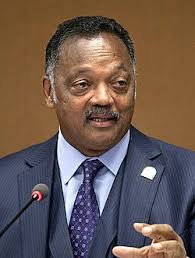
American civil rights activist, Rev. Jesse Jackson, died.
According to family sources, Jackson died peacefully on Tuesday morning, surrounded by his family members.
The statement announcing his death reads: “Our father was a servant leader – not only to our family, but to the oppressed, the voiceless, and the overlooked around the world,” The family say Jackson fought for civil rights alongside Martin Luther King Jr in the 1960s and was twice a candidate for the Democratic Party’s presidential nomination in 1984 and 1988.
A Drum Major for Justice Falls Silent: Remembering Jesse Jackson (1941–2026)
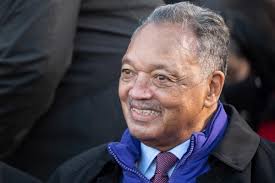
The voice that once thundered through rallies, pulpits, and presidential conventions has gone quiet.
Rev. Jesse Louis Jackson Sr., pastor, activist, presidential contender, and one of the most enduring figures of the modern civil rights era, has died at 84. He passed away peacefully in Chicago, surrounded by family — closing a chapter that spanned more than half a century of relentless advocacy for racial justice, economic equity, and political inclusion.
For millions, Jackson was not merely a leader. He was an institution.
From the Segregated South to the National Stage
Born on October 8, 1941, in Greenville, Jackson came of age under Jim Crow segregation. The indignities of the era shaped his theology and sharpened his politics. By the early 1960s, he had joined the swelling ranks of young Black Americans demanding full citizenship rights.
His trajectory changed decisively when he became a close associate of Martin Luther King Jr. and joined the Southern Christian Leadership Conference (SCLC). He was present during key campaigns of the Civil Rights Movement and was in Memphis in 1968 during King’s final days.
After King’s assassination, Jackson emerged as one of the most visible heirs to the movement’s moral authority — though he would carve his own path, blending civil rights activism with electoral politics and economic advocacy.
Building Institutions, Not Just Moments
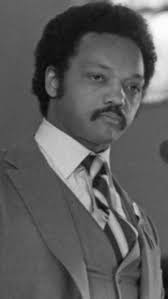
In 1971, Jackson founded Operation PUSH, focusing on economic empowerment, corporate accountability, and voter registration. Later, he established the National Rainbow Coalition, uniting minorities, labor groups, farmers, and progressive whites into a broader political alliance. The two organizations eventually merged into the Rainbow PUSH Coalition, headquartered in Chicago.
Jackson understood something critical: protest must evolve into power. His strategy moved beyond marches to negotiating corporate boardrooms and shaping political platforms.
The Presidential Campaigns That Changed American Politics
In 1984 and again in 1988, Jackson sought the Democratic presidential nomination under the banner of the Democratic Party. While he did not secure the nomination, his campaigns were groundbreaking.
He won millions of votes, captured multiple primaries in 1988, and expanded the electorate by registering and mobilizing minority voters. His “Rainbow Coalition” platform pressed issues that would later become mainstream — voting rights protection, economic justice, expanded healthcare access, and fair trade policies.
Decades later, when Barack Obama was elected president in 2008, many observers acknowledged that Jackson’s campaigns helped lay the electoral groundwork for that historic victory.
Health Battles and Final Years
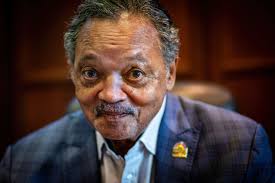
In 2017, Jackson publicly disclosed a diagnosis of Parkinson’s disease. In subsequent years, he faced additional complications linked to degenerative neurological conditions, gradually limiting his mobility and public appearances.
Yet even as his physical strength waned, his symbolic presence endured. Tributes routinely referred to him as a bridge — connecting the moral clarity of the 1960s to the evolving struggles of the 21st century.
In 2000, he was awarded the Presidential Medal of Freedom, the highest civilian honor in the United States — formal recognition of a life spent pressing America toward its constitutional ideals.
The Man Beyond the Movement
Behind the public persona was a husband, father, and grandfather. Jackson often spoke about faith as the anchor of his activism. His speeches blended scripture, cadence, and political urgency — a style uniquely his own.
He was admired, criticized, and polarizing at times, but rarely ignored. In every arena — from city halls to international diplomatic missions — he operated with the conviction that the marginalized deserved not charity, but power.
His family described him as a “servant leader to the oppressed, the voiceless, and the overlooked.” That phrasing captures the through-line of his life’s work.
Obama: We stood on Jackson’s shoulders
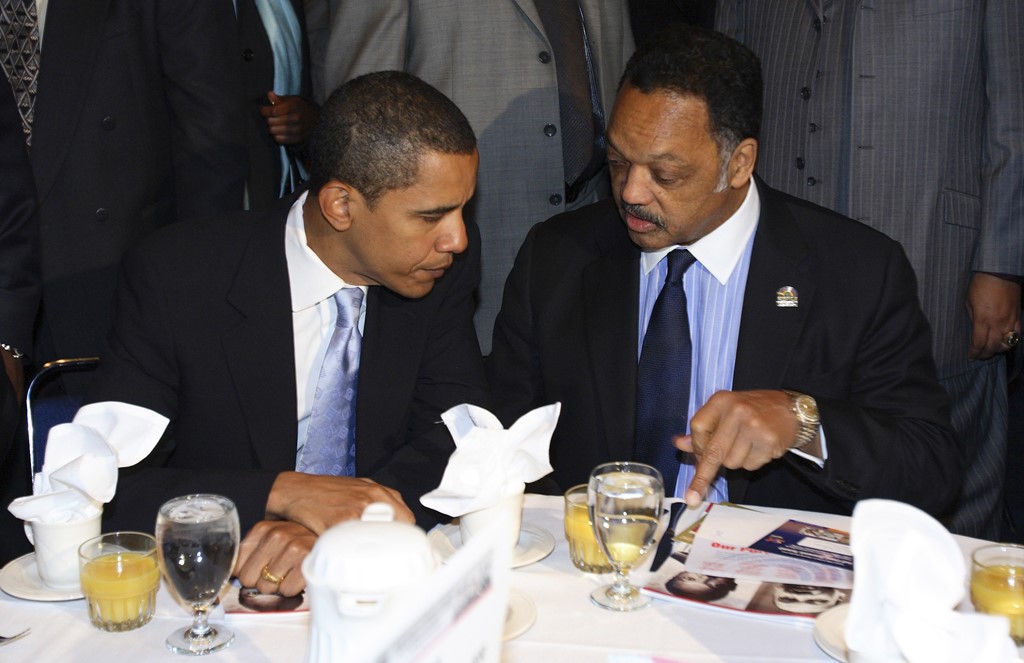
“Michelle and I were deeply saddened to hear about the passing of a true giant, the Reverend Jesse Jackson.
“For more than 60 years, Reverend Jackson helped lead some of the most significant movements for change in human history. From organising boycotts and sit-ins, to registering millions of voters, to advocating for freedom and democracy around the world, he was relentless in his belief that we are all children of God, deserving of dignity and respect.
“Reverend Jackson also created opportunities for generations of African Americans and inspired countless more, including us. Michelle got her first glimpse of political organizing at the Jacksons’ kitchen table when she was a teenager. And in his two historic runs for president, he laid the foundation for my own campaign to the highest office of the land.
“Michelle and I will always be grateful for Jesse’s lifetime of service, and the friendship our families share. We stood on his shoulders. We send our deepest condolences to the Jackson family and everyone in Chicago and beyond who knew and loved him.”