


Nigeria’s inflation rate eased marginally in January 2026, signalling a continued moderation in price pressures amid ongoing fiscal and monetary tightening.
The National Bureau of Statistics (NBS) on Monday reported that headline inflation declined to 15.1 percent in January, down slightly from 15.15 per cent recorded in December 2025 — a 0.05 percentage point decrease.
According to the bureau’s Consumer Price Index (CPI) report, the January figure also represents a significant improvement on a year-on-year basis. Headline inflation was 12.51 percentage points lower than the 27.61 per cent recorded in January 2025, indicating a substantial slowdown in the pace of price increases compared to the same period last year.
On a month-on-month basis, inflation contracted by 2.88 per cent in January 2026, compared to a 0.54 per cent increase in December 2025. The NBS said this reflects a slower rate of increase in the average price level relative to the preceding month.
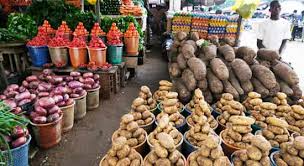
Food inflation — a critical component of Nigeria’s inflation basket — also recorded a sharp decline. The year-on-year food inflation rate stood at 8.89 per cent in January, a drop of 20.74 percentage points from the 29.63 per cent reported in December 2025.
Month-on-month, food inflation fell by 6.02 per cent in January, compared with a marginal decline of 0.36 per cent in December. The bureau attributed the moderation largely to decreases in the average prices of key staples, including water yam, eggs, green peas, groundnut oil, soya beans, palm oil, maize grains, guinea corn, beans, beef, melon (egusi), cassava tuber and white cowpeas.
The average annual rate of food inflation for the 12 months ending January 2026 was 20.29 percent, representing an 18.18 percentage point decline from the 38.47 percent recorded in January 2025.
At the subnational level, food inflation on a year-on-year basis was highest in Kogi (19.84 percent), Benue (18.38 percent) and Adamawa (17.29 percent). In contrast, Ebonyi (1.69 percent), Abia (3.23 percent) and Imo (3.74 percent) recorded the slowest increases in food prices over the same period.
On a month-on-month basis, however, Imo (-1.26 percent), Akwa Ibom (-2.21 percent) and Zamfara (-2.96 percent) posted the highest food inflation rates in January, while Yobe (-11.88 percent), Nasarawa (-9.06 percent) and Sokoto (-8.31 percent) recorded the steepest declines.
The latest data suggest that price pressures are gradually easing, particularly within the food segment, which has been the primary driver of inflation in recent years.