


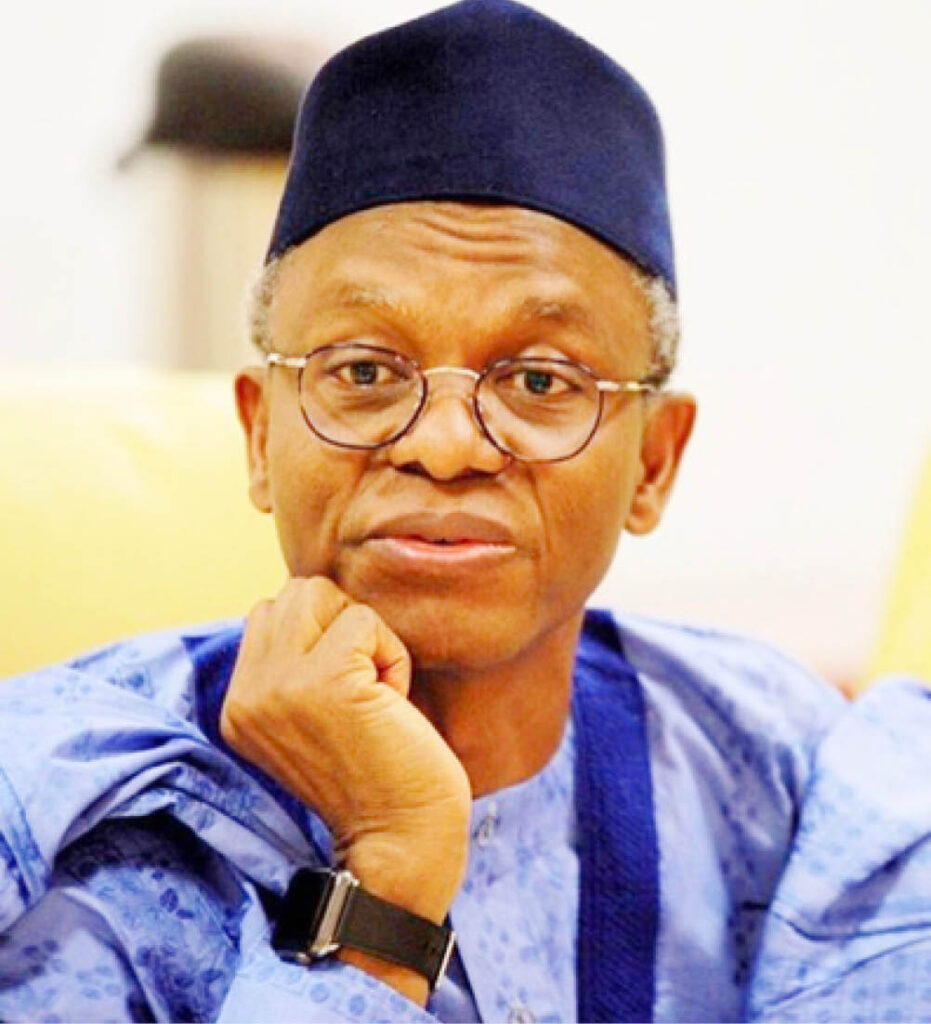
The Department of State Services (DSS) has filed a three-count criminal charge against former Kaduna State governor, Nasir El-Rufai, over alleged cybercrime offences linked to the purported wiretapping of the National Security Adviser.
The charge, marked FHC/ABJ/CR/99/2026, was instituted at the Federal High Court in Abuja on Monday. The secret police accused El-Rufai of breaching provisions of the Cybercrimes (Prohibition, Prevention, etc.) Amendment Act, 2024, and the Nigerian Communications Act, 2003.
According to court documents, the former governor allegedly admitted during a February 13 appearance on Arise Television’s Prime Time programme in Abuja that he and unnamed associates intercepted the telephone communications of the National Security Adviser, Nuhu Ribadu.
The offence is said to contravene Section 12(1) of the Cybercrimes (Prohibition, Prevention, etc.) Amendment Act, 2024, which criminalises the unlawful interception of electronic communications.
EFCC Interrogation Amid Tension
In a parallel development, the Economic and Financial Crimes Commission (EFCC) on Monday interrogated El-Rufai over alleged corruption during his tenure as Kaduna governor from 2015 to 2023.
The former governor, now a chieftain of the African Democratic Congress (ADC), honoured the commission’s invitation days after his legal team confirmed he would make himself available to investigators.
The interrogation follows a failed attempt to arrest him last Thursday at the Nnamdi Azikiwe International Airport.
El-Rufai arrived at the EFCC headquarters in Abuja accompanied by hundreds of supporters, triggering heightened security presence around the commission’s Jabi office. A mild standoff ensued when some of his aides and supporters were denied entry into the facility.
A source within the commission confirmed that the former governor was being questioned over alleged financial improprieties during his administration but declined to state how long the interrogation would last. Another insider hinted at the possibility of arraignment.
Legal Pushback and Street Protests
Ubong Akpan, counsel to El-Rufai, said the EFCC invitation was received while his client was overseas and described the earlier arrest attempt as unconstitutional.
“There exists no justifiable basis for this attempted arrest or the accompanying mistreatment,” he said, alleging violations of fundamental rights.
Outside the EFCC headquarters, two opposing groups of protesters gathered — one expressing solidarity with the former governor, the other demanding a thorough and transparent investigation.
Muhammad Abdullahi, who identified himself as spokesperson for one of the protest groups, warned against politicising the case.
“The ongoing prosecution of former Kaduna State governor, Nasir El-Rufai, remains a lawful and constitutional matter strictly between him and the Government of Kaduna State. This issue should not be reduced to political drama or emotional manipulation,” he said.
Responding, EFCC spokesperson Dele Oyewale appealed for calm, assuring demonstrators that their petitions would be forwarded to the commission’s executive chairman.
“The EFCC recognises the right of Nigerians to lawful protest. Your protest and demands will be communicated accordingly. The commission will continue to carry out its duties professionally,” he said.
The twin actions by the DSS and EFCC signal a dramatic escalation in legal pressures facing the former Kaduna governor, setting the stage for what could become one of the most consequential political prosecutions in recent years.